Eczema (TCM)
Acupuncture, herbal medicine and lymphatic work to clear damp-heat and restore the skin barrier.
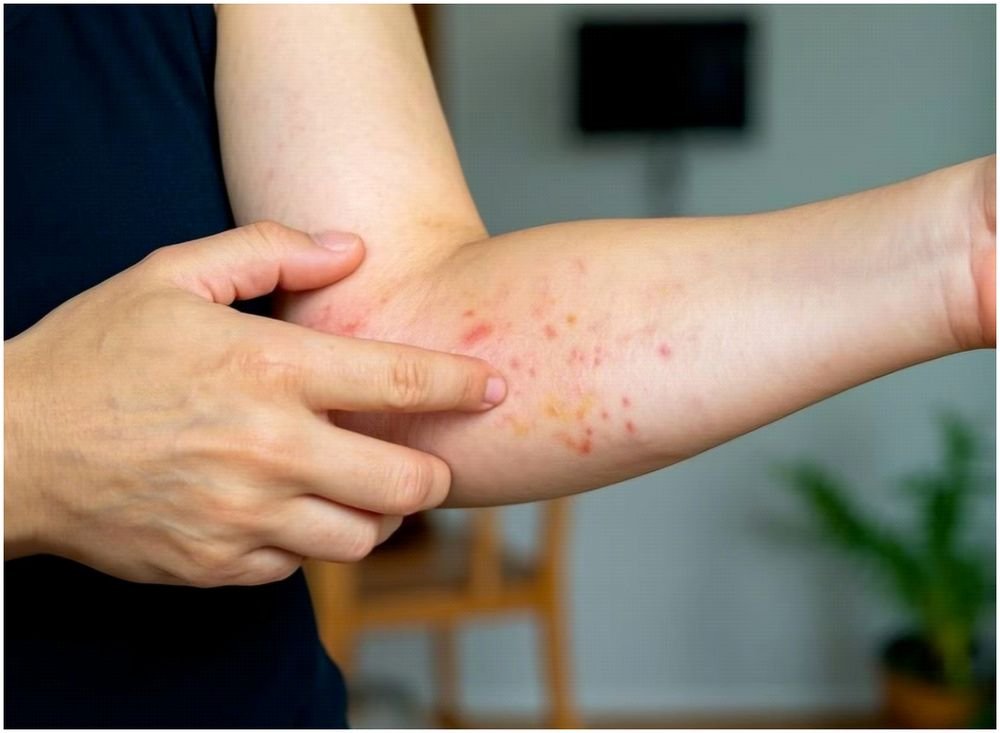
Eczema is an old acquaintance in dermatology — when it itches it gnaws at you, and once scratched open it readily weeps, crusts over and recurs without end. Many people have tried various creams and folk remedies, yet keep going round the same cycle of “improvement — relapse — worsening”. Behind eczema’s repeated flare-ups there usually lies a problem of triggers that have not been correctly identified and a root cause that has not been brought under control.
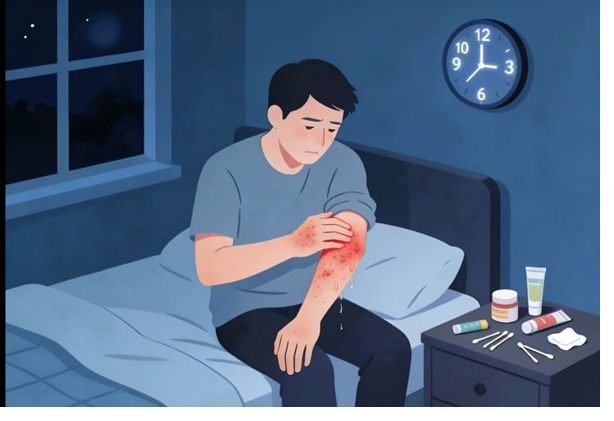
The core logic of recurrent eczema: a damaged barrier plus uncontrolled inflammation
In essence, eczema is a chronic, inflammatory, itchy skin disease. The core problem lies in two areas:
- A weak skin barrier: the “brick-wall” structure of the stratum corneum is damaged (as if the wall’s surface has peeled away), so external irritants (dust mites, chemicals) and allergens (pollen, food) easily penetrate the skin and trigger inflammation.
- Abnormal immune activation: the immune system becomes “over-sensitive”, releasing large amounts of inflammatory factors (such as histamine) in response to minor stimuli, leading to redness, swelling, itching and oozing.
If this problem is not resolved, eczema behaves like a weed — at the slightest provocation it flares up again.
The six common causes of recurrence
1. Persistent allergen stimulation
Eczema is closely linked with allergy, and prolonged contact with allergens repeatedly triggers inflammation:
- Inhaled allergens: dust mites (in bedding, in the crevices of sofas), pollen, pet dander, mould spores.
- Ingested allergens: milk, eggs, seafood, nuts, wheat and so on (more common in children).
- Contact allergens: fragrances/preservatives in cosmetics, metal jewellery (nickel), rubber gloves, detergents and the like.
Typical presentation: within hours to days of contact the eczema worsens with intense itching, possibly accompanied by allergic symptoms such as sneezing and a runny nose.
2. The barrier’s “leaks” left unrepaired
Over-cleansing and improper skin care damage the skin barrier:
- Frequent scalding hot-water washing: high temperatures strip the skin’s surface of its natural oils (the sebum film), aggravating dryness.
- Overuse of cleansing products: alkaline soaps and strong oil-stripping facial cleansers/shower gels dissolve the lipids of the stratum corneum and weaken the barrier.
- Over-exfoliation: frequent use of scrubs and acid products (alpha-hydroxy acids, salicylic acid) thins the stratum corneum.
- Inadequate moisturising: eczematous skin already retains water poorly, and if moisturiser is not applied consistently, dryness will further damage the barrier, creating a vicious cycle of “dryness -> itching -> scratching -> more dryness”.
3. Uncontrolled immunity and unmanaged inflammation
- Immune imbalance: high stress, staying up late, and infections (such as colds or tonsillitis) disrupt immune balance, making Th2 (pro-inflammatory) cells overactive so that they release more inflammatory factors.
- Incomplete treatment: stopping medication (especially steroid creams) as soon as symptoms ease — the surface inflammation is temporarily suppressed, but the deeper inflammation has not resolved, so it soon makes a comeback.
- Co-existing conditions: patients with allergic rhinitis, asthma or atopic dermatitis (an “allergic constitution”) have a systemic immune system in a state of high reactivity, so their eczema relapses more easily.
4. Environmental factors adding fuel to the fire
- Dry/cold climate: in winter the air humidity is low and the skin loses moisture quickly, so the barrier is more easily damaged.
- Heat and humidity: in summer one sweats more, and the salt and urea in sweat irritate the skin and provoke itching.
- Air pollution: particulates in PM2.5 and vehicle exhaust adhere to the skin, triggering oxidative stress and inflammation.
5. Scratching and “secondary injury”
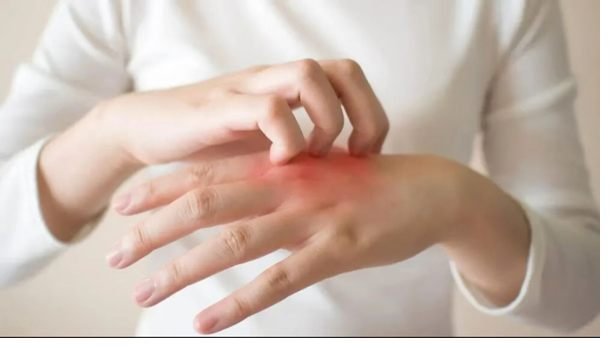
The more eczema itches the more one scratches, and the more one scratches the more it itches. Scratching will: damage the surface layer of the skin and cause weeping and crusting; activate nerve endings to release more itch signals (itch sensitisation); and introduce bacteria (such as Staphylococcus aureus), causing infection and aggravating inflammation.
6. Diet and lifestyle “missteps”
- Spicy, stimulating foods: chilli, alcohol and coffee stimulate blood-vessel dilation, aggravating redness, swelling and itching.
- A high-sugar, high-fat diet: sweets and fried foods promote the release of inflammatory factors.
- Late nights/stress: prolonged sleep deprivation and mental tension raise cortisol levels, suppressing repair of the skin barrier while also activating immune inflammation.
How TCM views eczema
TCM holds that eczema mostly arises from an intolerant constitution and irregular diet, compounded by externally contracted wind evil, so that the two evils — external and internal — contend with one another and wind-damp-heat evil soaks and saturates the skin. This disease is closely related to pathological changes in the four channels of the Heart, Lung, Liver and Spleen.
In the eyes of TCM, eczema often arises from damp-heat. As pathological products, dampness and heat-toxin should be discharged through outlets such as sweat, urine and stool; if there is little sweating, dark urine and dry stools, these routes are blocked, and the damp-heat tends to issue forth through the skin in another form, becoming eczema.
Where does the damp-heat come from?
- First, too much enters the body (the branch/manifestation): in spring and summer, with high temperatures and abundant rain, the body readily contracts an excess of damp-heat evil; or one eats too much meat, seafood and spicy food — as the saying goes, “fish breeds fire, meat breeds phlegm” — and animal foods readily generate damp-heat.
- Second, an insufficient ability to transform dampness (the root): this lies mainly in Spleen deficiency, which cannot transport and transform water-dampness, so that prolonged stagnation generates heat and ultimately damp-heat congests and obstructs the skin. As the Yang Ke Xin De Ji (Personal Experiences in Sores and Wounds) states: “Damp-toxin sores … arise because the Spleen and Stomach are depleted and damp-heat pours downward, so that the flesh loses sensation.” Damp evil is sticky and stagnant; it wraps around the viscera, obstructing the workings of the Spleen and Stomach, and once it is again stimulated by an external evil, the eczema flares up repeatedly.
Chinese and Western medical treatment
Western medical treatment: options include oral antihistamines (such as loratadine, cetirizine, etc.), topical boric acid solution, and steroid medications, which can rapidly relieve symptoms but tend to relapse once the medication is stopped.
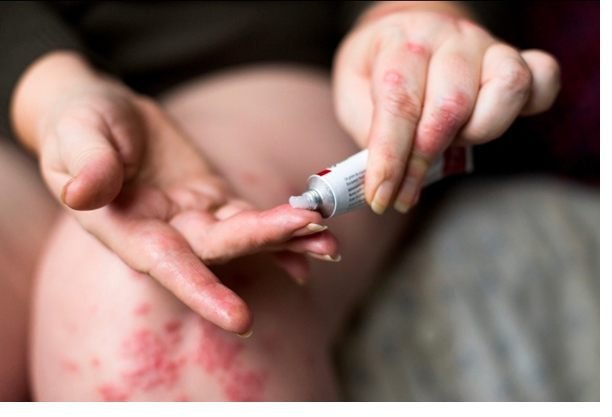
TCM treatment: treatment based on pattern differentiation —
- Damp-heat soaking-and-saturating pattern: modified Long Dan Xie Gan Tang (Gentian Liver-Draining Decoction) combined with Bixie Shen Shi Tang (Dioscorea Damp-Percolating Decoction).
- Spleen-deficiency damp-accumulation pattern: modified Chu Shi Wei Ling Tang (Dampness-Eliminating Calm-the-Stomach Decoction).
- Blood-deficiency wind-dryness pattern: modified Dang Gui Yin Zi (Angelica Drink) or Si Wu Xiao Feng San (Four-Substance Wind-Dispersing Powder).
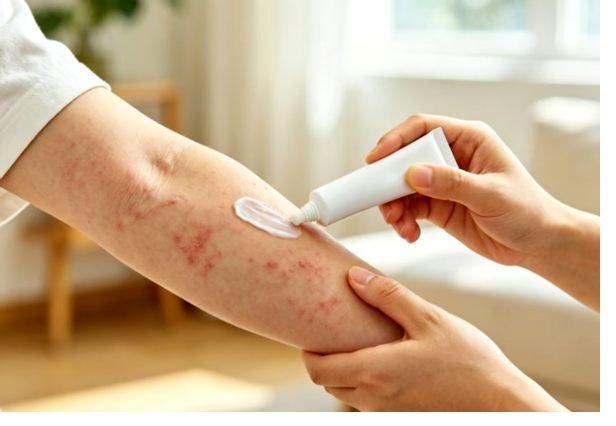
External treatments may include herbal wet compresses and the application of herbal ointments; other therapies may include acupuncture, lymphatic techniques and cupping.
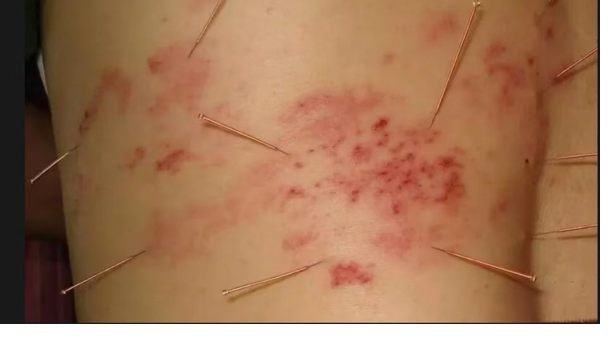
TCM’s heat-clearing and damp-transforming treatment is especially important for overcoming recurrent eczema:
- Clearing heat and resolving toxin: medicinals such as cortex dictamni (bai xian pi), phellodendron (huang bai) and scrophularia (xuan shen), or needling points such as Quchi (LI11), Hegu (LI4) and Xuehai (SP10), help drain heat-toxin.
- Strengthening the Spleen and transforming dampness: medicinals such as atractylodes (cang zhu), white atractylodes (bai zhu) and poria (fu ling), or needling points such as Sanyinjiao (SP6) and Zusanli (ST36), help dispel dampness and tonify the Spleen and Stomach.
This clinic’s integrated programme: acupuncture + herbal medicine + lymphatic techniques
Step one: acupuncture to mobilise the self-healing capacity
- Treating the branch: points such as Fengchi (GB20), Quchi (LI11), Hegu (LI4), Xuehai (SP10), Weizhong (BL40) and Yinlingquan (SP9) to clear heat and drain dampness, invigorate the blood, dispel wind and relieve itching.
- Treating the root: points such as Zhongwan (CV12), Zusanli (ST36), Sanyinjiao (SP6), Taibai (SP3), Geshu (BL17), Pishu (BL20) and Weishu (BL21) to strengthen the Spleen and harmonise the centre, nourish yin and harmonise the blood.
- Calming the spirit: combined with points such as Baihui (GV20), Yintang (EX-HN3) and Shenmen (HT7) to improve sleep.
Step two: herbal medicine treating both internally and externally
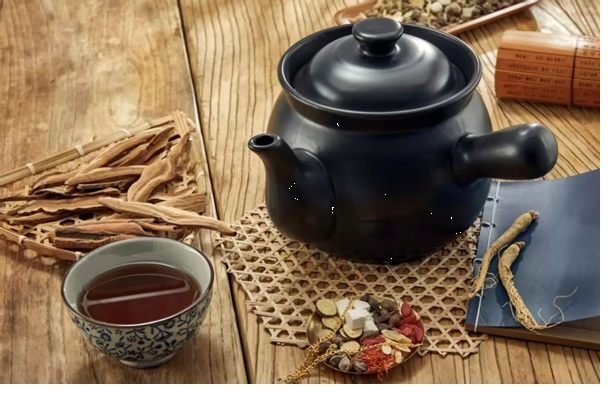
- Internal use: treatment based on pattern differentiation — clearing heat, strengthening the Spleen and nourishing the blood, so that the damp-toxin is broken down from within.
- External wash: medicinals such as sophora (ku shen), cortex dictamni (bai xian pi) and kochia (di fu zi) boiled in water for washing, helping to ease itching.
Step three: lymphatic techniques and the fascia gun to improve function and counter allergy
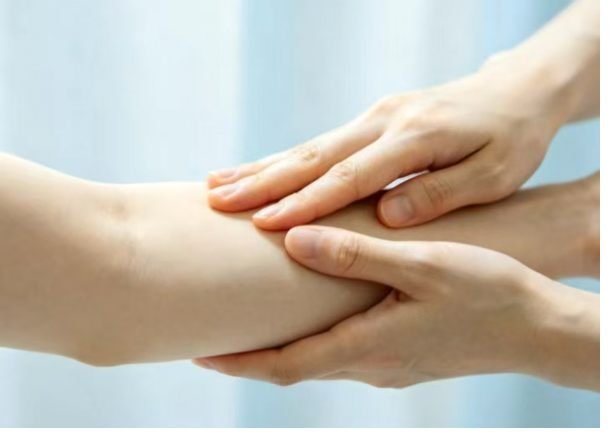
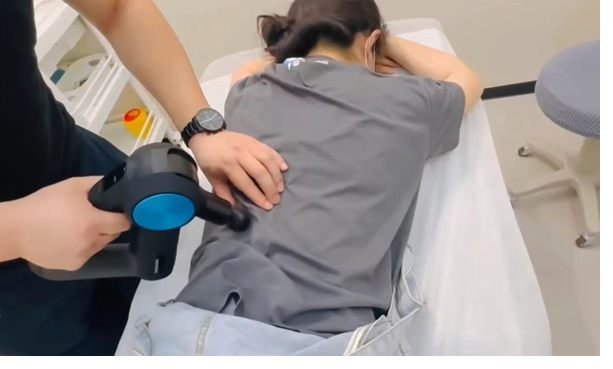
The lymphatic system is both a detoxification system and an immune system, an important channel within the body for recycling metabolic waste and for detoxification. If the lymph does not flow freely, waste stagnates and accumulates, which can give rise to a series of problems including skin disease. Manual lymphatic drainage techniques can both help to carry away toxins and strengthen immunity, making them an ideal way to unblock the lymph; combined with the use of a fascia gun, they also have clinical value as an adjunct in the treatment of skin disease.
A gentle reminder
Recurrent eczema is not a sign of “overly delicate skin”, but the combined result of a damaged barrier, uncontrolled inflammation and triggers that have not been removed. To break the cycle, one must work on three fronts — “avoiding triggers, repairing the barrier, controlling inflammation” — and patiently persist with science-based care and treatment. Eczema is controllable and treatable, and there is no need to become overly anxious about recurrences; results vary from person to person, so please consult a registered Chinese medicine practitioner.
Wondering if this treatment suits you? Get in touch to enquire.