Vertigo & Ménière's
Acupuncture, herbs and craniosacral therapy for Ménière's disease and BPPV-related vertigo.
“My ears are buzzing, as if I were standing by the sea hearing huge crashing waves; the whole world is spinning, I lie in bed not daring to move, feeling nauseous and vomiting as though I were on a rollercoaster…” This condition, commonly known as “imbalanced ear fluid” — Ménière’s disease — is troubling more and more people.
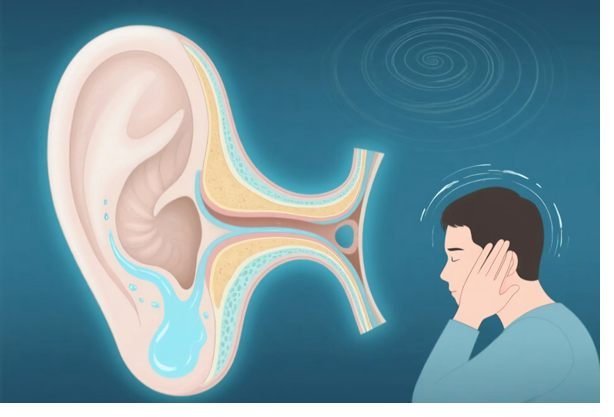
What is Ménière’s disease?
Commonly called “imbalanced ear fluid,” it simply means there is too much “water” (lymphatic fluid) in the inner ear, swelling and distending the tiny ducts. The inner ear is like a small maze, responsible for hearing sound and keeping the body in balance; if the “water” inside cannot drain away and the pressure rises, it causes vertigo, tinnitus and hearing loss.
How frightening is an attack?
Ménière’s disease is like a “time bomb”: during an attack the following may occur:
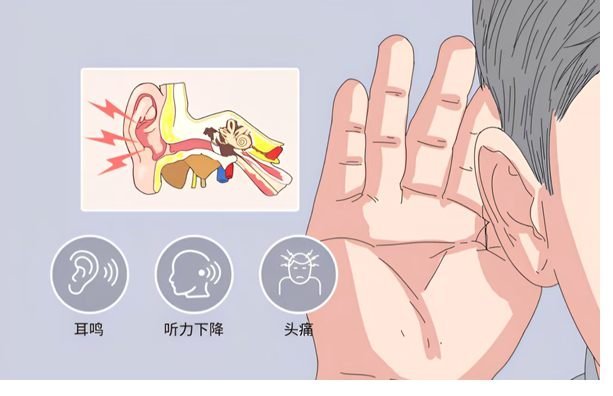
- Vertigo: a sudden spinning sensation, as if thrown into a washing machine, lasting from 20 minutes to several hours.
- Tinnitus: a sound like cicadas chirping in the ear, or a buzzing electrical hum.
- Hearing loss: sounds seem as though heard through a membrane, with low tones especially hard to make out.
- Ear fullness: a sensation that the ear is stuffed with cotton wool, dull and blocked.
- Between attacks: things may feel completely normal, but hearing will gradually deteriorate.
Can it be cured? How is it treated?
1. Western medication
To relieve dizziness and nausea, and ease symptoms.
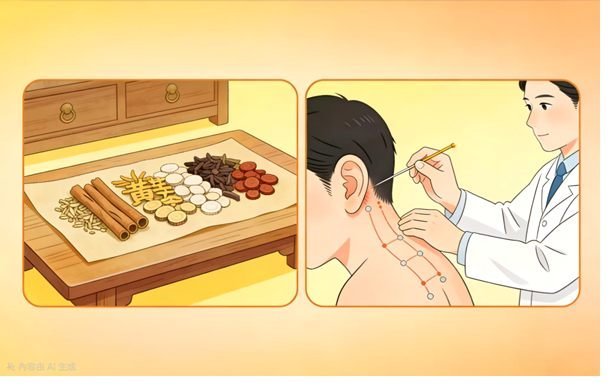
2. Acupuncture: stimulating acupoints to relieve vertigo quickly
Commonly used acupoints (3–5 selected per session, needles retained for 20–30 minutes):
- Baihui (GV20) (the crown of the head) — raises yang and secures against collapse, relieving vertigo
- Fengchi (GB20) (either side of the hairline at the back of the neck) — unblocks the flow of qi and blood in the head
- Tinggong (SI19) (in the depression in front of the tragus) — directly improves tinnitus
- Taichong (LR3) (in the web between the big toe and second toe on the top of the foot) — calms the liver and brings down fire, relieving dizziness
- Zusanli (ST36) (four finger-widths below the knee) — strengthens the spleen and dispels dampness, preventing “fluid accumulation”
Tip: during the active phase, acupuncture may be performed daily; once symptoms ease, 2–3 times weekly to consolidate the effect.
3. Herbal medicine: treatment based on pattern differentiation, regulating the constitution
Medicines are chosen according to the symptom pattern (requires a TCM practitioner to take the pulse and write a prescription):
- Liver-yang hyperactivity type (dizziness + irritability + flushed face): Tianma Gouteng decoction — Tianma (gastrodia), Gouteng (uncaria), Shijueming (abalone shell) — to calm the liver and subdue ascendant yang.
- Phlegm-damp obstructing the middle type (heavy head + nausea + thick tongue coating): Banxia Baizhu Tianma decoction — Banxia (pinellia), Baizhu (atractylodes), Fuling (poria) — to transform phlegm and dispel dampness.
- Kidney-essence deficiency type (tinnitus + lower-back ache + forgetfulness): Zuogui pill or Erlong Zuoci pill — Shudi (prepared rehmannia), Shanyao (Chinese yam), Shanzhuyu (cornus) — to tonify the kidney and replenish essence.
- Dual deficiency of qi and blood type (fatigue + pale complexion): Guipi decoction — Huangqi (astragalus), Dangshen (codonopsis), Danggui (Chinese angelica) — to tonify qi and nourish the blood.
External application: Wuzhuyu (evodia) applied to Yongquan (KD1, the sole of the foot) — to draw fire downward and relieve tinnitus.
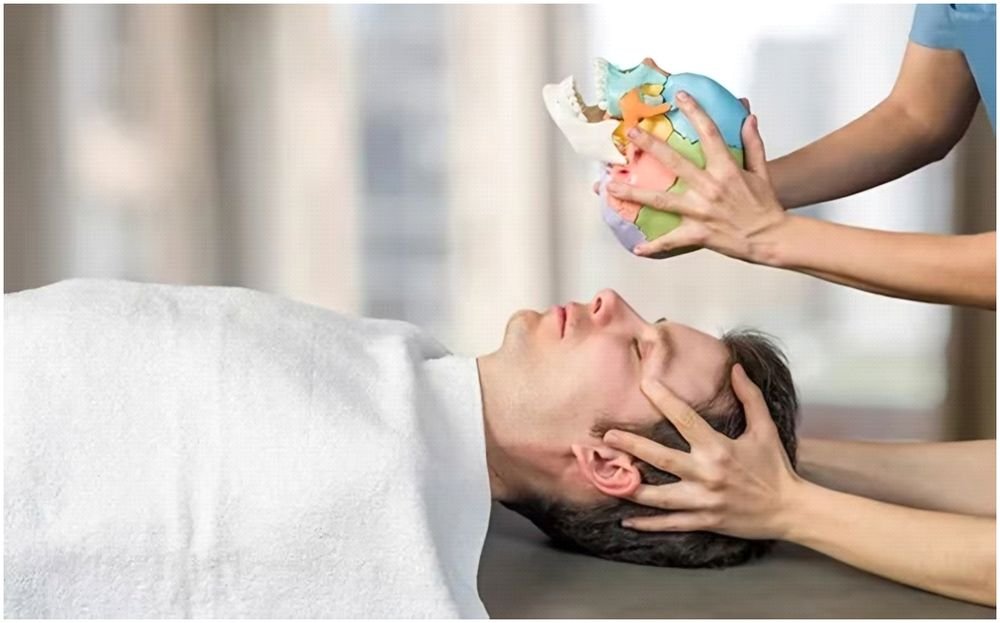
4. Craniosacral therapy
This offers a gentle new approach for managing imbalanced ear fluid.

How can attacks be prevented? Everyday care is key
- Low-salt diet: eating too much salt worsens “fluid accumulation” in the ear.
- Give up coffee, smoking and alcohol: these irritate the ear and aggravate symptoms.
- Avoid late nights and anxiety: high stress can readily trigger vertigo.
- Avoid loud noise, and avoid turning the head suddenly and sharply.
- Moderate exercise: such as walking and yoga.
Remember: less salt, less stress and fewer late nights all help to keep the ears healthy.
Otolith displacement (BPPV)
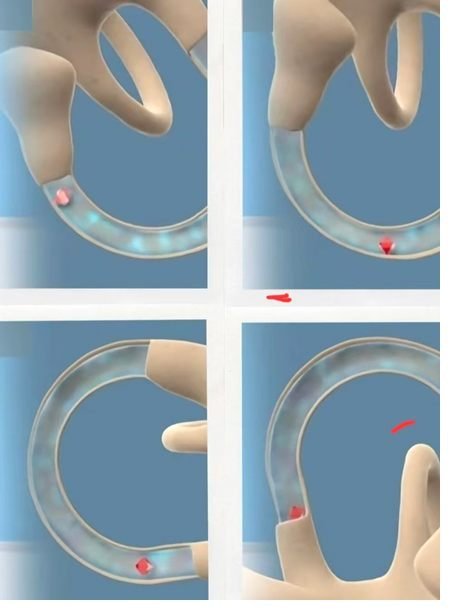
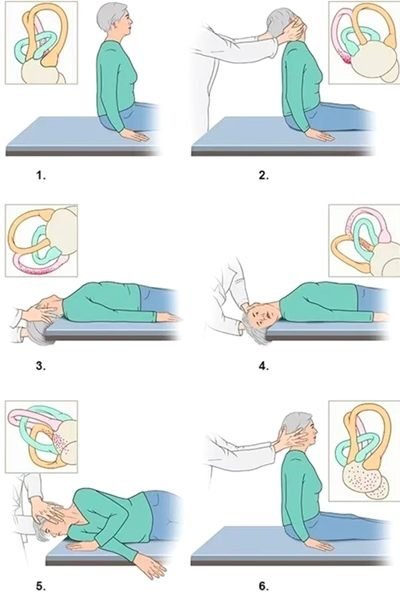
“Otolith displacement” is also often grouped under “imbalanced ear fluid.” It occurs when tiny calcium-carbonate crystals (otoliths) in the inner ear become dislodged from their usual chamber in the utricle and fall into a semicircular canal where they do not belong. When the head position changes markedly, these crystals roll along with the lymphatic fluid and stimulate the balance nerve, triggering brief vertigo.
One treatment method uses specific head-position manoeuvres, relying on gravity to return the otoliths to their original position.
Results vary from person to person; please consult a registered TCM practitioner.
Wondering if this treatment suits you? Get in touch to enquire.