Tinnitus Treatment
Addressing stress and TMJ dysfunction with acupuncture, electro-acupuncture and craniosacral therapy.
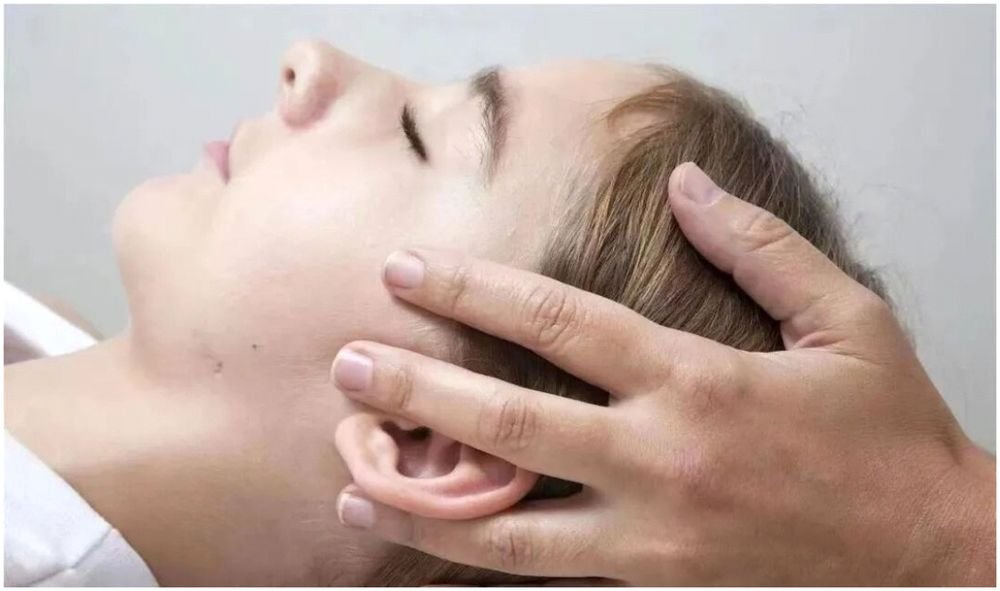
Tinnitus may be the body’s distress signal
Do you often hear a sudden “buzzing” sound deep in the night, or a noise like an electrical current, lingering persistently in your ears? Have you grown resigned to your tinnitus, having tried countless ear treatments yet never managed to find the underlying cause?
In fact, tinnitus is not always a problem with the ears themselves; rather, it is the body sending you a signal — one closely linked to stress, anxiety, and even temporomandibular joint dysfunction.
Stress-related tinnitus: why are your ears crying for help?
When tinnitus appears, many people’s first reaction is to assume that “the ears have broken,” and so they begin to undergo all manner of ear examinations. However, tinnitus is not always an ear disease; very often it is a reflection of an imbalance elsewhere in the body. In particular, when stress is high and anxiety severe, tinnitus may well be an “alarm” signalling temporomandibular joint (TMJ) dysfunction.
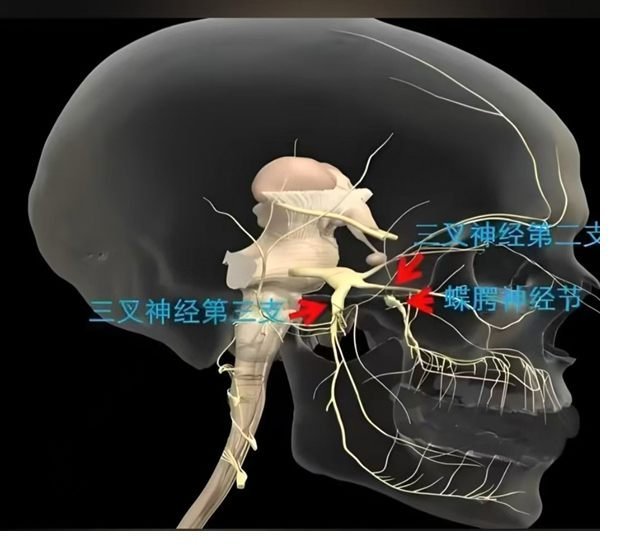
Activation of the trigeminal nerve, unconscious “clenching of the jaw,” and excessively tense muscles can all be causes of TMJ dysfunction. And once this joint loses its normal function and begins to affect the nerves near the ear canal, tinnitus quietly takes the stage.
At this point, tinnitus is no longer merely an ear problem; it is more an alert from the body, reminding you that excessive stress and overly tense muscles have led to a whole-body imbalance. Tinnitus becomes the body’s distress signal, prompting you to pay attention to your true health concerns.
TMJ dysfunction: the “hidden culprit” behind stress-related tinnitus
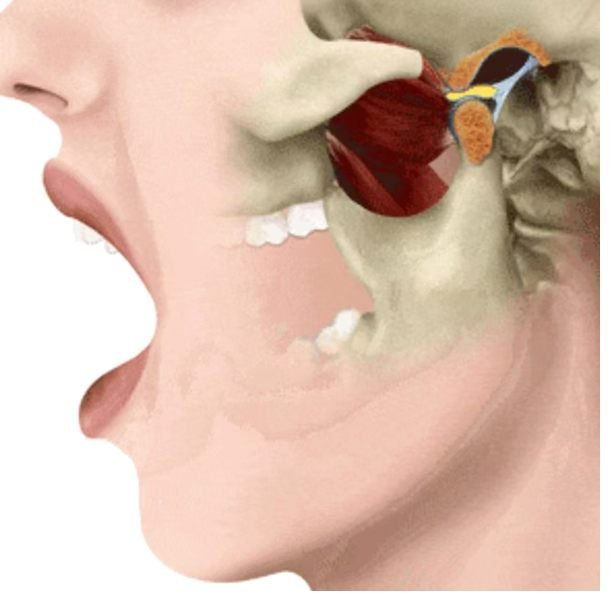
The position of the temporomandibular joint is highly distinctive: it lies directly in front of the ear, almost “pressed against the ear canal.” When you open your mouth, chew or speak, it is always at work; and precisely because it sits so close, once this joint develops a problem it can easily “implicate” the ear.
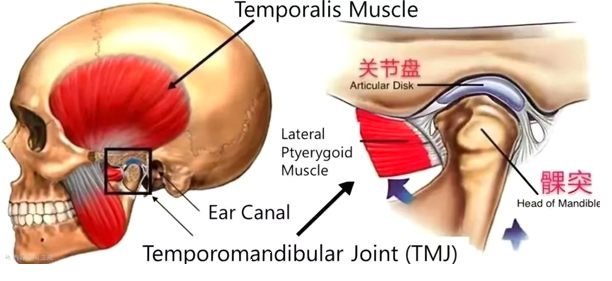
Moreover, the TMJ is not merely a mechanical structure; it is also highly connected to the nervous system, being supplied in particular by the trigeminal nerve, which in turn influences the auditory pathways of the brainstem. In other words, once this joint is disordered, it is not only “uncomfortable to move” — it may also directly alter how you perceive sound.
In real life, many people who live under prolonged stress will unconsciously clench their jaw, grind their teeth, and tense the lower jaw. If this state persists, it causes the TMJ to bear load unevenly over the long term, gradually developing functional disturbances such as joint tension, slight misalignment, and uncoordinated movement.
And once these changes appear, they may set off a chain reaction:
The muscles around the joint stay persistently tense → traction or pressure develops near the ear canal → nerve signals are disturbed → tinnitus is the eventual result.
This is also why some people notice “strange but real” phenomena: for example, the tinnitus changes when they open their mouth, clench their teeth, or press on the face or temples; or it noticeably worsens when they are tense or fatigued. These all suggest that the source of the tinnitus may not lie in the ear itself, but in the temporomandibular joint and its related structures.
How does stress make tinnitus worse?
When a person is under stress, the body automatically enters a state of “alert.” At this point the nervous system is “turned up in volume”: the heart rate quickens, breathing becomes shallow, and the muscles tense — especially in the face and lower jaw, where the jaw is unconsciously clenched.
At the same time, the brain begins to give priority to processing “abnormal signals,” and tinnitus happens to be treated as one such signal. In other words, much of the time it is not that the tinnitus has suddenly become more severe, but that the brain, under stress, “hears it more clearly.”
More crucially, once tinnitus appears it can easily trigger anxiety. You dwell on the sound over and over, from suspecting a problem with your ears to worrying whether it will keep getting worse — and this continual attention itself makes the nervous system still more aroused. A very subtle change then emerges: the more you mind it, the more noticeable it becomes.
At the same time, changes are also taking place at the physical level. Prolonged stress makes you unconsciously clench your teeth and tense the lower jaw, and the TMJ happens to sit right against the ear; once it is in a state of tension or even slight misalignment, it produces traction and irritation around the ear canal. This means that stress is not only “amplifying tinnitus” but also “creating tinnitus.”
And so a classic vicious cycle takes shape:
Stress increases → nervous arousal → jaw clenching and tension → the joint is affected → tinnitus worsens → anxiety rises → stress grows greater.
For many people, what is truly distressing is not the tinnitus itself, but the fact that this cycle will not stop. This also explains why some people find that, although all their examinations are normal, the tinnitus keeps recurring — because the problem does not lie in the ear alone, but within the whole stress-nerve-muscle-joint system.
Integrated TCM treatment (a holistic approach)
Acupuncture
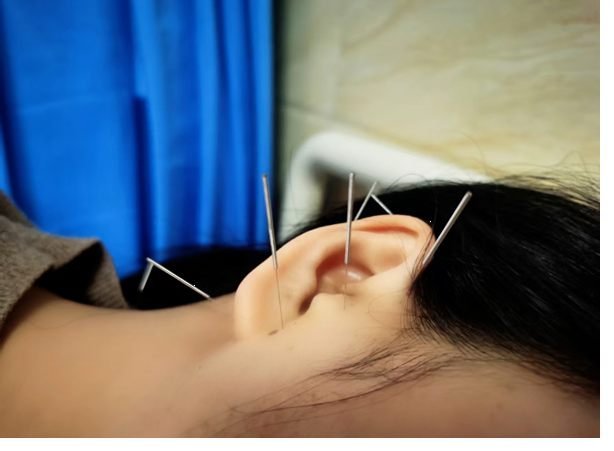
Based on clinical pattern differentiation, different acupoints and reinforcing-reducing techniques are selected; by stimulating specific points, the qi and blood of the meridians are regulated and the micro-circulation of the ear is improved.
Electro-acupuncture
An electrical attachment is added to the acupuncture needles, so that a weak current gives the points continuous, steady stimulation.
Craniosacral therapy
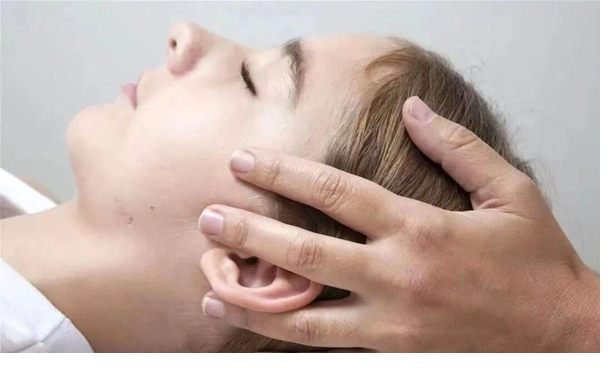
Craniosacral therapy is a gentle manual treatment that, by adjusting the cerebrospinal fluid and the craniosacral rhythm, helps relieve states of tension in the body and restore balance to the nervous system. The focus of treatment is on adjusting the temporal bone, because misalignment of the temporal bone is often the root of TMJ dysfunction. By restoring the temporal bone to its normal position (for example, with the ear-pull technique), it is possible not only to improve the function of the TMJ but also to help ease tinnitus and break the vicious cycle of anxiety and stress.
This treatment approach is increasingly recognised by clinicians, and is especially helpful for the nerve and muscle problems caused by stress-related tinnitus. Through craniosacral therapy, it is possible not only to relieve tinnitus but also to regulate the body’s overall state and restore balance to body and mind.
Course of treatment and precautions
The effectiveness of acupuncture for tinnitus varies according to the length of the condition and the individual constitution. The treatment period is generally twice a week, with 8 sessions making up 1 course, for a total of 1-2 courses; the specific course of treatment varies from person to person and condition to condition. During treatment the condition may fluctuate, which is a normal phenomenon — only by persevering with treatment can a stable result be achieved. During this period, please keep a calm state of mind and avoid mental strain; favour a mild, light diet and avoid raw, cold and irritating foods; ensure adequate sleep and avoid excessive fatigue.
Results vary between individuals. Please consult a registered Chinese medicine practitioner.
Wondering if this treatment suits you? Get in touch to enquire.